Summer Fun Can Come With a Sting: Yellowjackets and Paper Wasps

Yellowjackets are already making the headlines this year, even though it’s early in the season. The San Francisco Chronicle and other NorCal newspapers reported a July 3 yellowjacket attack on more than 70 attendees of the Alameda County Fair. Apparently, the ground-dwelling yellowjackets were disturbed by a fireworks display in the fairgrounds arena. None of the victims, who ranged in age from a 6-month-old infant to a person over age 60, exhibited allergic reactions or required hospitalization, although some received multiple stings.

In the Seattle area, also over the July 4th weekend, at least five people were treated for anaphylactic shock from stings believed to be from yellowjackets in separate incidents, according to a Pierce County public health official.

A small paper in Northeastern Ohio recently published a follow-up story on a man who nearly died from stings last summer after he ran over a ground nest of yellowjackets with his lawn mower. He’s been receiving weekly doses of bee venom over the past year in attempt to build up his immunity, the Hudson Hub Times reports.

And last month in Atlanta, several police officers chasing a DUI suspect who had abandoned his vehicle following a high-speed car chase were stung and one seriously injured when they ran through a clump of kudzu, disrupting a swarm of yellowjackets.

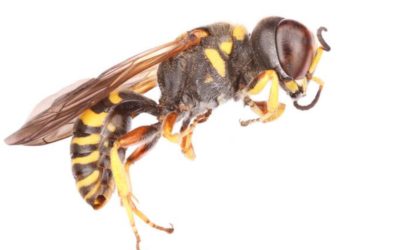
YellowjacketThere are two types of “social wasps” in our Sacramento pest control region: yellowjackets and paper wasps. Of the two, yellowjackets are more aggressive and dangerous to humans. Yellowjackets will attack if their nest is threatened or, less frequently, if someone tries to swat them away from a food source. Paper wasps are less defensive, less apt to sting, and shy of humans unless their nest is located near a traffic-way such as a door or gate.

Both yellowjackets and paper wasps start building their nests in early spring, when a single queen emerges from winter hibernation as the weather warms. From spring to late summer, they forage primarily for protein, usually in the form of other insects, to feed their growing colonies. Later in the summer and early fall, the colony may have grown to as many as 15,000 individuals. Large amounts of sugar are needed to feed the queens and workers, and this is when they become more troublesome to humans. It’s not uncommon for swarms of yellowjackets or wasps to aggressively forage around trash cans, dumpsters or human picnics and barbeques, where they may crawl into soda cans and sting when the unsuspecting victim takes a drink.

The most common type of yellowjacket found in our Sacramento pest control area is the ground-nesting western yellowjacket, (Vespula pensylvanica), sometimes called the “meat bee.” Other types of yellowjackets common to Northern California include Vespula vulgaris, often found in dead trees in foothill or mountain terrain, and the German yellowjacket (V. germanica), which often nests in houses in urban areas. Most types of yellowjackets have distinctive black and yellow stripes on the abdomen and have a very short narrow “waist.” Paper wasps are larger, about an inch long, usually black or brown in color with red or yellow patches, and have a long slender “waist” and long legs.

Yellowjackets may build their nests in abandoned rodent burrows or even inside the walls of houses, where a hole in the wall may result from the insects’ work to expand the next space. The nest contains rows of cells and is enclosed in a paper envelope the insect manufactures from wood fiber and saliva. Other types of yellowjackets build hanging nests beneath eaves or tree branches. Paper wasp nests, usually built under eaves or branches, also contain rows of cells but are open, with no paper covering. A nest normally contains no more than 200 individuals.

Mud daubers, which may be mistaken for yellowjackets or paper wasps, build nests out of hardened mud. Mud daubers are usually not aggressive and rarely sting.

In most cases, a single yellowjacket or wasp sting does not cause serious injury. However, in some cases people have allergic reactions that can be life-threatening—even when previous stings caused no reaction. The risk of a severe reaction increases with multiple stings.

Initial symptoms of a sting usually will be pain, redness and swelling. In more severe cases, the victim may have hives, nausea, vomiting, abdominal cramps or headache. Symptoms of severe allergic reaction typically occur within 30 minutes and may include shock, dizziness, unconsciousness, difficulty breathing, and swelling of the throat. Anyone exhibiting this type of allergic reaction must receive immediate emergency medical attention—call 911.

Unlike honeybees, whose barbed stingers are usually left in the victim’s skin, yellowjackets and wasps can sting repeatedly. The best thing to do if you are attacked is to leave the area.

Here are some tips to avoid stings, courtesy of University of California Statewide Integrated Pest Management System:

  • Avoid areas where a yellowjacket or wasp nest is visible. If you do go into an area with bee or wasp activity, wear long pants and a long-sleeved shirt. A mosquito/gnat veil can be used to protect your head.
  • Avoid wearing perfume, cologne, or scented soaps in areas where there is bee and/or wasp activity.
  • Wear shoes when walking through vegetation, especially clover or other blooming plants.
  • Avoid brightly colored clothing.
  • If a bee or wasp lands on your arm, try to remain calm until the insect leaves, or brush it away gently and slowly with a piece of paper.
  • Insect repellent applied to your skin or clothing will not protect you from stinging insects.

For more information about yellowjackets, wasps and other stinging insects, feel free to call our experienced Sacramento pest control professionals at 916-457-7605.

No comment »

Spider Bites Rare, But Can Be A Pain

BlackWidowHrGlassCS0471421Spiders, long a favored subject of sci-fi movies and horror novels, seem to provoke an especially strong yuck factor in humans. Although we know on an intellectual level that they have many beneficial purposes in the eco-system, including eating other insect pests, most of us don’t want them in our kids’ bedrooms.

Now that warm weather has arrived, spiders are proliferating outdoors and often making their way into our homes.

Of the more than 50,000 species of spiders, only a relatively few of them are able to bite humans, for the simple reason that most have mouth parts too small to break human skin. Only one type of California spider, the Black Widow, is considered to be a serious medical danger, particularly to small children, elderly or frail adults. (See our article, “Why Spiders Don’t Make Good House Guests,” for more information about Black Widow spiders.) Even at that, it has been more than 10 years since anyone died from a Black Widow bite, largely because effective treatments have been developed.

A few years back, we heard a lot in the news about brown recluse spider bites, whose bite can be fatal or create serious, debilitating injuries. Brown recluse spiders are found in the Southern United States and do not live in California, although there are occasional reports of one having hitched a ride on a moving van and showing up here. A cousin of the brown recluse, the South American native Loxosceles laeta, has been spotted in Los Angeles County. Another cousin, the Lososceles deserta, or desert recluse, is found as far north as Merced and Fresno counties, but not in our Sacramento pest control region.

One source of confusion is that it can be hard to distinguish one type of spider from another. Even the distinctive shiny black of the Black Widow can vary, and immature females may have lighter brownish and variegated markings.

A number of spiders that are sometimes found in or around our homes may be mistaken for a brown recluse. And while their bites are not nearly as serious as that of the brown recluse, they can leave a painful wound that resembles a brown recluse bite as well as other symptoms. These include the running spider, jumping spider, wolf spider, tarantula, sac spider, orbweaver spider and hobo spider, also known as the northwestern brown spider.

The household spiders most commonly encountered by our Sacramento pest control technicians are the yellow sac spider and the hobo spider. In fact, although its bite is not fatal, the yellow sac spider is believed to be responsible for more human bites than any other species.

Symptoms of a spider bite may include pain and burning at the site of the bite, a circle of pale skin surrounding the red center of the bite, which may form a blister or ulcer and burst. Care should be taken to keep the bite clean and disinfected; seek medical attention immediately if infection sets in. In some cases, the victim may develop a red, itchy rash within the first three days, muscle and joint pain, fever, chills, swollen lymph nodes, headache, nausea and vomiting. Hobo spider bites, in particular, may cause a painful, open wound that is slow to heal and is frequently misidentified as a brown recluse bite. See your doctor if the bite becomes infected or healing is delayed. Wolf spider bites can result in blackening of the skin in the bite area, and pain and swelling may persist for 10 days or longer. In most cases, symptoms of a spider bite will go away without treatment within a week to 10 days.

The best way to determine the type of bite is to trap the critter who did it, if you can do so safely, or collect it in a plastic bag if it has been killed, and take it to a pest control professional or University extension facility for identification. But many times, the victim doesn’t even know he or she has been bitten until a sting is felt or other symptoms develop. Stings or bites from other insects, poison oak or staph infections are often mistaken for spider bites. In cases where the bite is believed to be from a Black Widow or brown recluse spider, seek medical help immediately.

Here is some additional advice for treatment of spider bites from the California Poison Control System:

  • Wash the site of the spider bite well with soap and water.
  • Apply a cool compress or ice pack over the spider bite location.
  • Over-the-counter pain relievers may be used to relieve symptoms. (Remember, do not give aspirin to children; use acetaminophen or ibuprofen instead).
  • Call the doctor or seek emergency treatment if the victim is a young child, if you think the bite may have been from a black widow or brown recluse spider, if any signs of an allergic reaction occur, if the bite area becomes infected, or if the victim develops a rash or severe illness.
  • If possible, retrieve the spider and bring it with you to the health care practitioner so that it can be definitively identified.
  • A tetanus booster shot may be necessary, depending upon the date of the patient’s last immunization.

Remember, it is difficult to control spiders with over-the-counter pesticides. Reducing clutter, de-webbing, cleaning in corners and sealing cracks and crevices where spiders can get in may help. If you need help with uninvited spiders in your home or place of business, call our trained Sacramento pest control professionals at 916-457-7605 for a same-day inspection, free estimate and information about our integrated pest management services.

No comment »

Earth-Friendly Ant Control on Sacramento News10

Our friends at Sacramento News 10 called recently about a story they were doing on how to get rid of ants without harming the environment. Long story short, it seems one of the newscasters had woken up that morning to find ants in her kitchen!

The news team gathered some home remedies from their Facebook fans, such as baby powder, cayenne pepper and cinnamon, white chalk and even dried cream of wheat. Then they turned to the experts!

Earth Guard Pest Management manager Barbara Romig and technican Lito Marquez from our excellent team of Sacramento pest control professionals were happy to share information about Earth Guard’s line of green pest control products, which include botanical oils that stop the ants without the use of toxic chemicals that can get into the air or water. Here’s a link to the clip on Earth Guard’s YouTube channel:

Comments (1) »

ANTS!

We’re still getting calls about ants with every shower. This great article about a 2001 Stanford study of 69 California households explains that bug spray and ant baits simply won’t stop them. The culprit is weather: The study concludes that ant “abundance is highest in winter when the weather is cold and wet, and there is a second, smaller peak in the hotter, drier part of summer.”

 The article goes on to discuss the ecological impact of the Argentine ant that has successfully invaded California. Among other impacts, the Argentine ant has decimated native ants that are a food source for the native horned lizard found in the San Diego area. The Argentine ants are so successful in part because they do not fight among their own species but rather treat other Argentine colonies as part of their extended family. Hmm, maybe a lesson there for our human species…

No comment »

New EPA-Sponsored Video on Rat Prevention

Check out this new video from the EPA Pesticide Program. It’s disgusting but sort of funny at the same time!

New Public Service Announcement on Rodent Management

A new video public service announcement provides information on how to prevent rats and mice from infesting homes. Entitled “Infestations Vacations,” the video is a spoof of a television commercial advertising a vacation service for rats…. The public service announcement was developed by EPA’s Office of Pesticide Programs in partnership with students from Howard University in Washington, D.C. It was produced by the Earth Conservation Corps, a non-profit organization that prepares inner-city youth for environmental careers. To view the video, go to:

http://www.epa.gov/pesticides/controlling/rodents.htm#video

For more about rats common to our Sacramento pest control region, see our earlier blog post at http://earthguardpest.com/blog/?p=21


No comment »

Don’t Let the Bed Bugs Bite!

“Nighty-night. Sleep tight. Don’t let the bed bugs bite.” When I was a child, I’d hear that affectionate bedtime tease from an older person once in a while. But never did I see a bed bug in the flesh, and for a long time I thought bed bugs were just make-believe, like the boogie man or the monster under the bed.

But as a grownup and owner of a Sacramento pest control company, I now know bed bugs do indeed exist. Practically unheard of when I was a kid, bed bug infestations have become increasingly common in the United States since the 1980s, likely as a result of increased global travel and trade, changes in available pesticides and possibly pesticide resistance. Once associated with crowded, deteriorated housing conditions, bed bugs infestations in the finest hotels have made recent headlines.

Whatever the reason for their resurgence, bed bug infestations are difficult to treat and exceptionally easy to transmit to other locations.

Bed bugs are widespread in temperate climates, most commonly in North America, Europe and Central Asia. The most common bed bug species in California is Cimex lectularius, an oval-shaped, reddish-brown insect, about one-fifth inch long, with a pyramid-shaped head. Female bed bugs lay 200 to 500 white eggs in small clusters of 10 to 50, affixed to rough surfaces like paper or wood by a white sticky coating and not generally visible to the naked eye. Often the egg shells remain in place after the bugs have hatched. During daylight hours, bed bugs hide in cracks and crevices behind headboards, under loose wallpaper and in seams of mattresses, usually not more than a few feet away from a bed and their night-time food source—you!

Bed bugs go through five nymph stages before they reach adulthood, and must take a blood meal at each stage before molting to the next stage. The life cycle may take up to four months, depending on room temperature and access to food. Bed bugs typically live six months to a year, and adults can live for a year or more without feeding.

Although bed bugs can feed on rodents or birds, their optimal food source is humans. At night, they are attracted to the warm bodies of their sleeping food sources, puncturing the skin, and feeding for five to 10 minutes until engorged. Usually the victim sleeps through the pinprick bite, not realizing he or she has been bitten until the next morning. Saliva secreted by the bed bug may cause itchy red welts and in some cases more severe allergic reactions. The only way to know the bite is from a bed bug rather than a mosquito or spider is to find evidence of a bed bug infestation.

Although there is not hard scientific evidence that bed bugs transmit diseases to humans, older scientific literature associated bed bugs with such diseases as tuberculosis, smallpox and plague. Recent studies indicate that while the bugs do indeed ingest disease germs from humans, they do not replicate or transmit the germs back to humans.

Adult bed bugs and clusters of the lighter-colored nymphs are visible to the naked eye, but because they hide so well, it usually takes a thorough inspection to spot them. Since bed bugs are almost always found near a bed, start by checking mattress seams, box springs, head boards and bed frames. They also leave tiny, dark-red fecal stains and shed skins that are sometimes easier to spot than the insects themselves. They have stink glands, and you may notice a strong, rotten meat smell where there is a heavy infestation.

Bed bugs are great travelers, and you may inadvertently bring them home in luggage or packages, from hotels, movie theaters, and bus or train seats. If your holiday plans include travel, whether you’re staying at a 5-star hotel or a roadside inn, a good rule of thumb is to leave your bags at the door of your room, pull up the bedding and check the mattress seams and surrounding nooks and crannies for any sign of these unwelcome occupants—before you start unpacking.

Eliminating bed bugs is time- and labor-intensive. Pesticide treatment must be coupled with thorough steam cleaning, vacuuming, washing of bedding in hot water, sealing up hiding places, and ongoing monitoring of the affected areas. Over-the-counter chemicals are less effective in field tests, and the most effective pesticides for use on bed bugs must be applied by licensed pest control professionals.

To read more about bed bugs and other pest control and environmental issues, visit my blog at http://earthguard.com/blog.

For more detailed info about bed bugs, try these excellent sources of information:

http://www.ipm.ucdavis.edu/PMG/PESTNOTES/pn7454.html

http://www.pctonline.com/Article.aspx?article_id=37351

No comment »

The Ants Go Marching…

You remember that old song we used to sing on school field trips or at summer camp—“The ants go marching one by one….” The chorus ends: “And they all go marching down—to the ground—to get out—of the rain—boom boom boom.”

As in many fairy tales and childhood songs, there is a kernel of truth in that verse: Rainy weather does send ants scurrying, long columns of them rushing here and there, searching for any crack or crevice that will take them out of the drowning wetness, into someplace warm and dry.

Our Sacramento pest control company recently got a frantic call from a woman who had put off dealing with an enormous ant infestation on a large crepe myrtle tree that hung over her driveway. On a recent rainy morning, she walked out through her garage to pick up the morning paper, only to step, barelegged, into a swarm of ants that were using the concrete seam in the center of her garage floor as a highway under the garage door and into her dry garage.

Once ants are present in large numbers, they can be exceptionally difficult to eliminate. Inspection and identification of the type of ant is critical to effective treatment—and may be an argument for calling on a trained pest control professional rather than depending on a can of spray and a prayer. (For more information about common Sacramento-area ants, visit my blog post at http:// http://earthguardpest.com/blog/?p=13.)

For customers who choose a “green” pest control solution, which most often involves placing baits that the ants carry back to their colonies, follow-up monitoring, refilling of bait stations and reinspection are required, and it usually takes longer to be completely ant-free.

If you find yourself, like our customer, with ants crawling up your legs, or you walk into your kitchen to see a trail of ants across the floor and up your cabinet doors, here are some immediate steps to take—instead of grabbing for a can of bug spray:

If ants have been attracted by a food source, locate the source, remove it and clean the area thoroughly.

  • Clean the trail with soapy water or spray cleaner and wipe up or vacuum up ants.
  • Try to determine where the ants have entered your home, and caulk the opening or plug it with petroleum jelly.

With the rainy season upon us, ants from your yard or garden will be looking for ways into your warm, dry home. Take a look around your foundation, doors and windows; check around spas, storage sheds and garbage cans. Take quick action to prevent ants from moving in for the winter!

For more information about ants and other household pests, visit www.earthguardpest.com, or call us at 916-457-7605.

No comment »